Having the right equipment makes a big difference to your comfort, safety, and overall experience in the mountains of Nepal. Weather, altitude, and terrain can change quickly, so being well prepared is key. Below is a simple guide to the essential gear you should bring.
1. Clothing (Layering Matters)
Layering helps you adjust to changing temperatures throughout the day.
Base layers: Moisture-wicking tops and bottoms made from merino wool or synthetic materials
Mid layers: Fleece jackets or light insulated vests for warmth
Outer layers: Waterproof and windproof jacket, insulated down jacket, quick-dry trekking pants, and waterproof over-pants
Accessories: Warm gloves, sun hat, woolen cap, neck gaiter, and comfortable trekking socks
2. Footwear
Good footwear is essential for long walking days and uneven trails.
Strong, waterproof trekking boots with ankle support
Lightweight camp or lodge shoes for evenings
Gaiters for snow, mud, or rainy conditions
3. Bags & Packs
You’ll need two types of bags during your trek or climb.
Duffel bag (70–90L): Tough and waterproof, suitable for porter transport
Daypack (25–35L): For water, camera, snacks, and personal items during the day
Rain covers for both bags
4. Personal Items & Accessories
These items help keep you comfortable and prepared each day.
Four-season sleeping bag (rated to around -10°C)
Trekking poles
Reusable water bottles or hydration system
Headlamp with spare batteries
Sunglasses, sunscreen, and personal toiletries
Basic first-aid kit and water purification tablets or filter
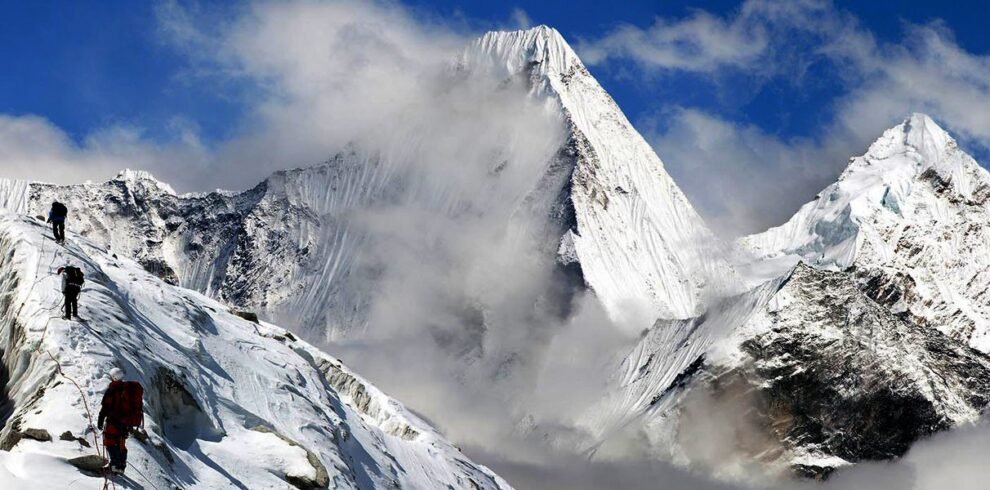
5. Technical Gear for High-Altitude Expeditions (6,000m and Above)
For climbing peaks, specialized mountaineering equipment is required.
Mountaineering boots, crampons, ice axe
Climbing harness, helmet, carabiners
Ascender, belay or descender device, and ropes
High-altitude clothing such as down jacket and pants, insulated gloves, and ski goggles
6. Additional Climbing Equipment
Depending on the route and conditions, extra safety gear may be needed.
Extreme cold-rated sleeping bag (-20°C or lower)
Climbing backpack (40–60L)
Avalanche safety gear such as transceiver and snow shovel
Other technical equipment as required for the expedition
7. Helpful Gear Tips
Renting heavy or technical gear in Nepal can save both cost and luggage weight
Break in your boots and test your backpack before your trip
Pack light, follow seasonal weather advice, and adjust clothing based on the region and time of year