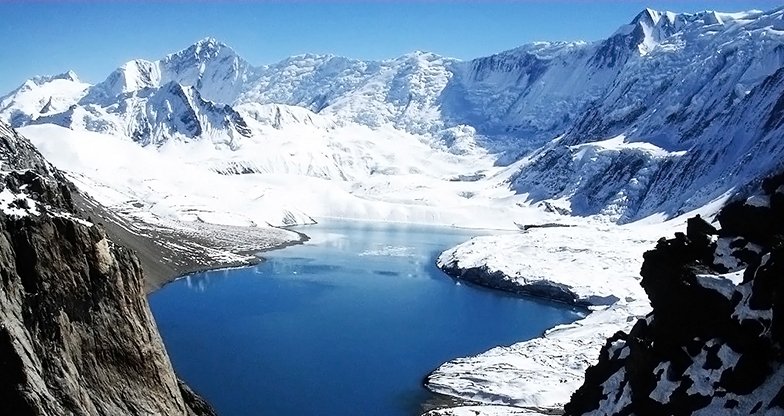
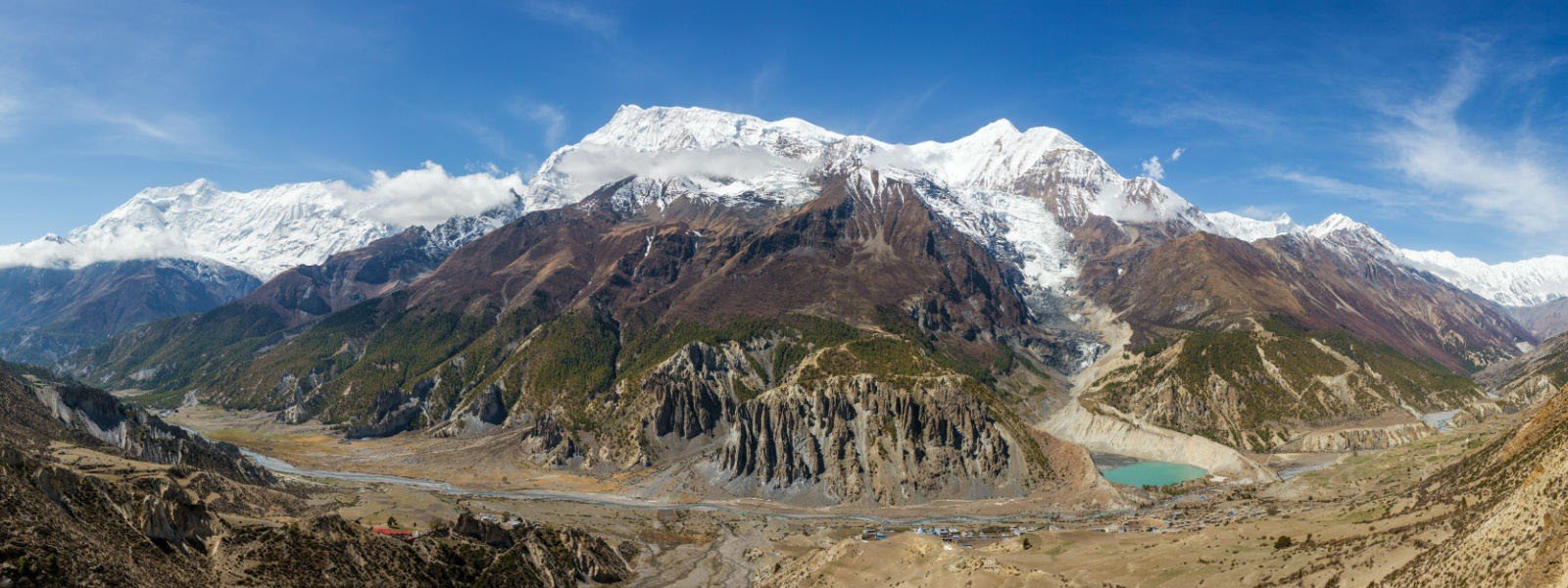
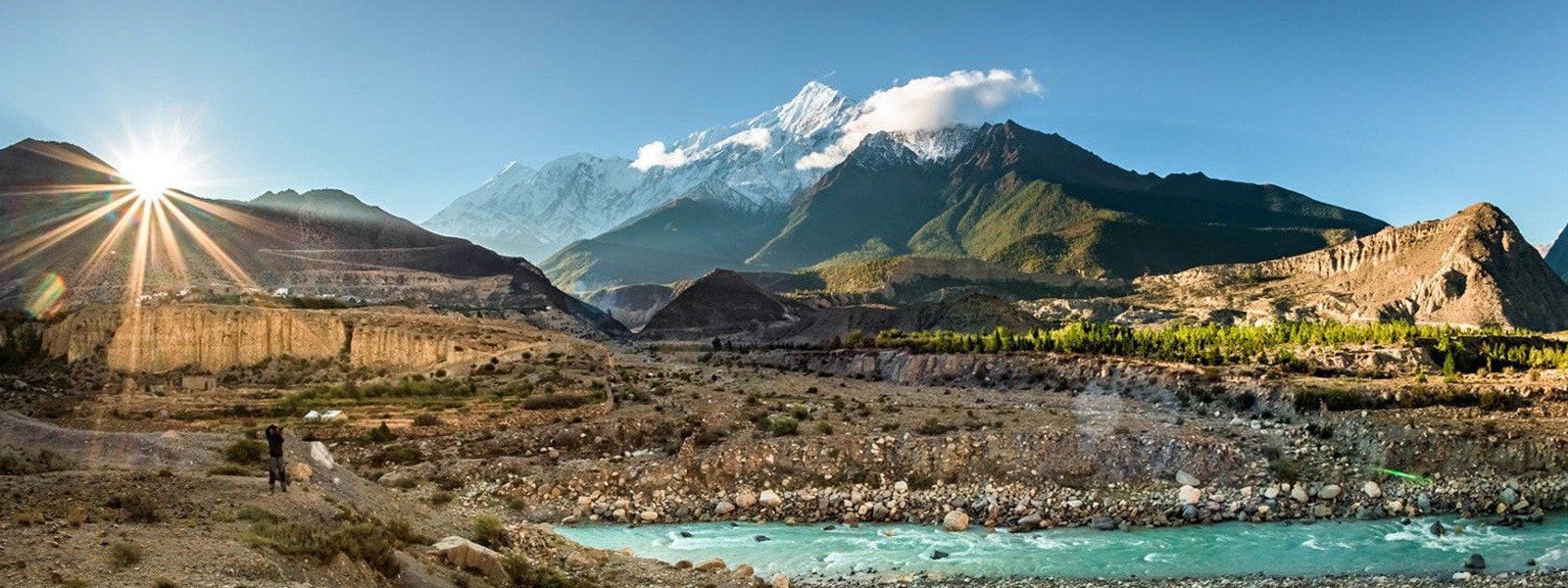
The Annapurna Circuit trek winds through the stunning mountain ranges of central Nepal. Depending on the route and use of motorized transport, the trek covers 160–230 km (100–145 mi). The trail crosses two major river valleys and circles the Annapurna Massif, reaching its highest point at Thorong La Pass (5,416 m), at the edge of the Tibetan Plateau. Most trekkers hike the circuit anticlockwise, allowing a slower daily altitude gain and making the high pass crossing safer and more manageable.
Renowned as one of the world’s best long-distance treks, the Annapurna Circuit offers incredible diversity in both climate and culture. Hikers experience tropical valleys at 600 m and Arctic-like conditions at Thorong La, while passing through Hindu villages in the lower foothills and Tibetan-influenced settlements in the Manang Valley and lower Mustang region. Road construction, such as the Beisahar–Manang road, has shortened parts of the traditional trail and altered some villages, but it has also opened new opportunities for mountain biking, especially in Mustang.
Trip Info
-
Hotel/Tea houses.
-
Sep-Nov & March-May
-
5415m
-
Fly/Car/Jeep/ Bus
-
5/6 hours
Overview
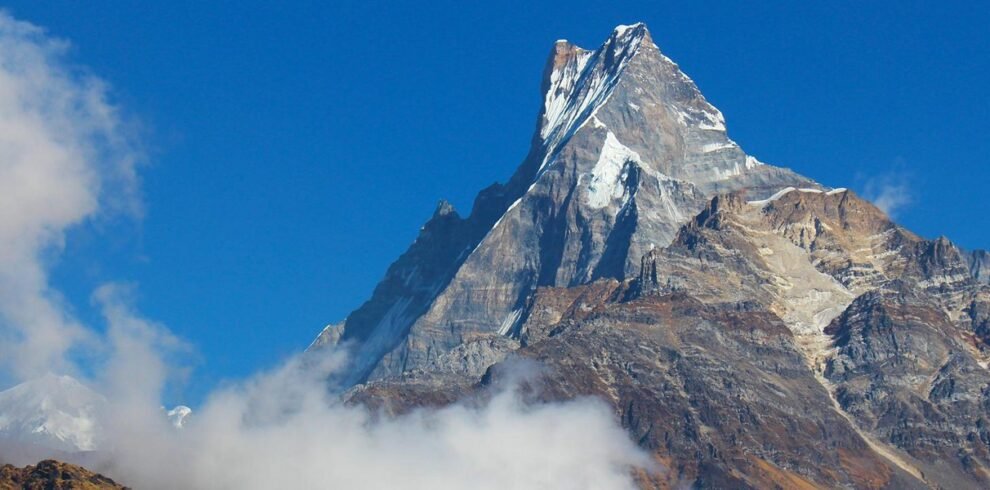
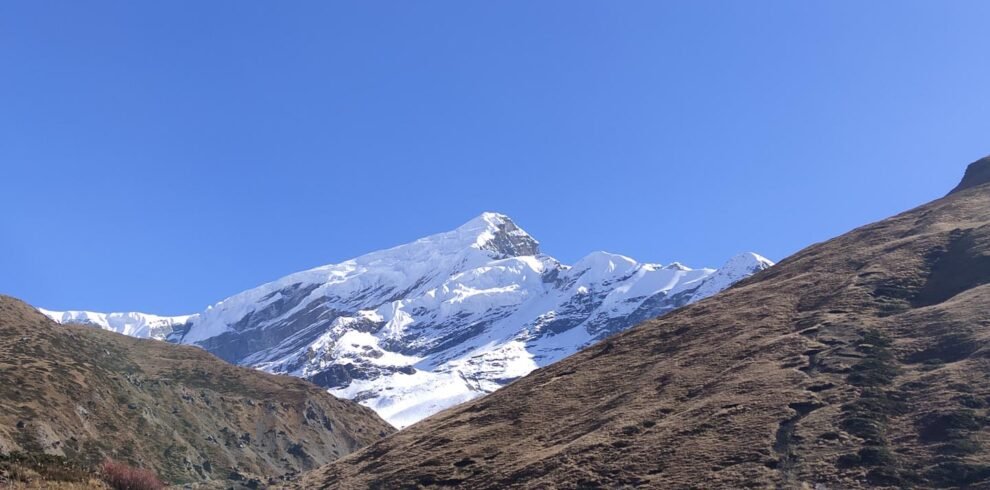
The trek offers breathtaking close-up views of the Annapurna Massif (Annapurna I–IV), Dhaulagiri, Machhapuchhre, Manaslu, Gangapurna, Tilicho Peak, Pisang Peak, and Paungda Danda. In addition, many other towering peaks between 6,000 and 8,000 meters rise majestically from the Annapurna range.
Trip Highlights
- Pass by the yak pastures.
- Natural hot springs at Tatopani where you can choose to take a dip.
- Jomsom - the headquarter of Mustang.
- A day at tourist hub Pokhara.
- Spectacular views of Mt. Annapurna, Thorung Peak, Nilgiri, Chulu West, and Chulu East, Tukuche Peak, Dhaulagiri, Lamjung Himal, Annapurna II, and Annapurna IV.
- Visit the beautiful Manang district.
- Magnificent lakes, glaciers, deep gorges, and stunning waterfalls.
- Visit Muktinath (a sacred place for both Hindus and Buddhists) known for 108 stone faucets, and eternal flame Cross Thorong La Pass at 5,416 meters.
- Visit Barge Monastery, the largest monastery in the Manang district.
- Poon Hill Viewpoint (3,210 m).
Itinerary
Arrive in Kathmandu and transfer to your hotel. Altitude: 1,350 m.
After breakfast, depart from Kathmandu and drive to Besisahar, the gateway to the Annapurna region. The journey takes approximately 7 hours, passing through the scenic Trishuli Valley, terraced fields, and traditional Nepali villages. Along the way, you’ll see the bustling towns, rivers, and suspension bridges that are characteristic of rural Nepal. This drive provides your first glimpse of the Annapurna foothills, as distant peaks appear on the horizon. Besisahar is a small town situated along the Marsyangdi River and serves as the starting point for your trek. Upon arrival, check into your hotel or guesthouse and spend the evening preparing for the trek ahead.
In the early morning, board a local sharing jeep and drive from Besisahar to Chame, the district headquarters of Manang. The journey takes around 5 hours, winding along the Marsyangdi River and through picturesque villages, terraced fields, and lush forests. You’ll gradually begin to feel the mountain air as the landscape changes from subtropical lowlands to the alpine foothills. Chame sits at 2,670 meters and offers stunning views of Annapurna II, Lamjung Himal, and other surrounding peaks. Upon arrival, check into your lodge, enjoy a warm meal, and take a short walk around the village to acclimatize and admire the Himalayan scenery.
Begin your trek from Chame after breakfast, following the Marsyangdi River upstream through forests of pine, rhododendron, and bamboo. The trail gradually ascends, passing traditional Gurung and Manangi villages, prayer wheels, and stone mani walls that reflect the local culture. As you climb higher, the valley opens up, offering spectacular views of Annapurna II, Lamjung Himal, and Pisang Peak. Stop for breaks at scenic spots along the way and enjoy the fresh mountain air. Reach Upper Pisang in the afternoon, a charming village perched on a hill with stone houses and narrow alleys. Check into your lodge and take time to explore the village and soak in the panoramic Himalayan views.
After breakfast, continue your trek from Upper Pisang, following a scenic trail that gradually ascends through the dramatic Marsyangdi Valley. The path takes you past terraced fields, mani walls, and small villages, with breathtaking views of Annapurna II, Gangapurna, and Pisang Peak. You’ll notice the landscape becoming more arid and alpine as you approach Manang, reflecting the transition toward the Tibetan-influenced region. The trail is moderately challenging but rewarding, with plenty of opportunities to rest and capture the surrounding mountain scenery. Arrive in Manang by afternoon, a picturesque village at 3,450 meters, known for its traditional houses, monasteries, and spectacular Himalayan panorama. Take time to acclimatise, explore the village, and enjoy the stunning views of nearby peaks like Gangapurna and Tilicho.
Take a well-deserved rest day in Manang to acclimatize to the high altitude. This helps your body adjust before tackling the higher passes ahead. You can spend the day exploring the village, visiting local monasteries, or enjoying the serene Himalayan scenery. For those feeling adventurous, an optional hike to the stunning Ice Lake (4600 m) is available. This moderately challenging trek offers panoramic views of Gangapurna, Annapurna III, and other surrounding peaks, along with the chance to experience the high-altitude alpine environment. Return to Manang in the afternoon to relax, enjoy a warm meal, and prepare for the next stage of your trek.
After breakfast, begin your trek from Manang toward Yak Kharka or Ledar, a moderate 4-hour hike that continues through the arid, high-altitude landscape of the Annapurna region. The trail passes grazing fields for yaks, scattered stone houses, and prayer flags fluttering in the crisp mountain air. Enjoy panoramic views of Gangapurna, Annapurna III, and Tilicho Peak as you ascend gradually, giving your body time to adjust to the increasing altitude. Upon arrival at Yak Kharka or Ledar, settle into your lodge and take in the peaceful surroundings. This stop is an important acclimatization point before crossing the Thorong La Pass, allowing you to rest and prepare for the more challenging days ahead.
After breakfast, embark on a short but steady hike from Yak Kharka to Thorong Phedi, the base village for crossing the Thorong La Pass. The trek takes approximately 3–4 hours, following a rocky and gradual trail through the high-altitude alpine landscape. Along the way, you’ll pass yak grazing areas, scattered lodges, and prayer flags marking the trail. The air becomes thinner as you ascend, so take frequent breaks and enjoy the dramatic views of Annapurna and Dhaulagiri ranges. Thorong Phedi sits at 4,600 meters and serves as the final acclimatization stop before the challenging pass. Spend the afternoon resting, hydrating, and preparing for the early morning Thorong La crossing.
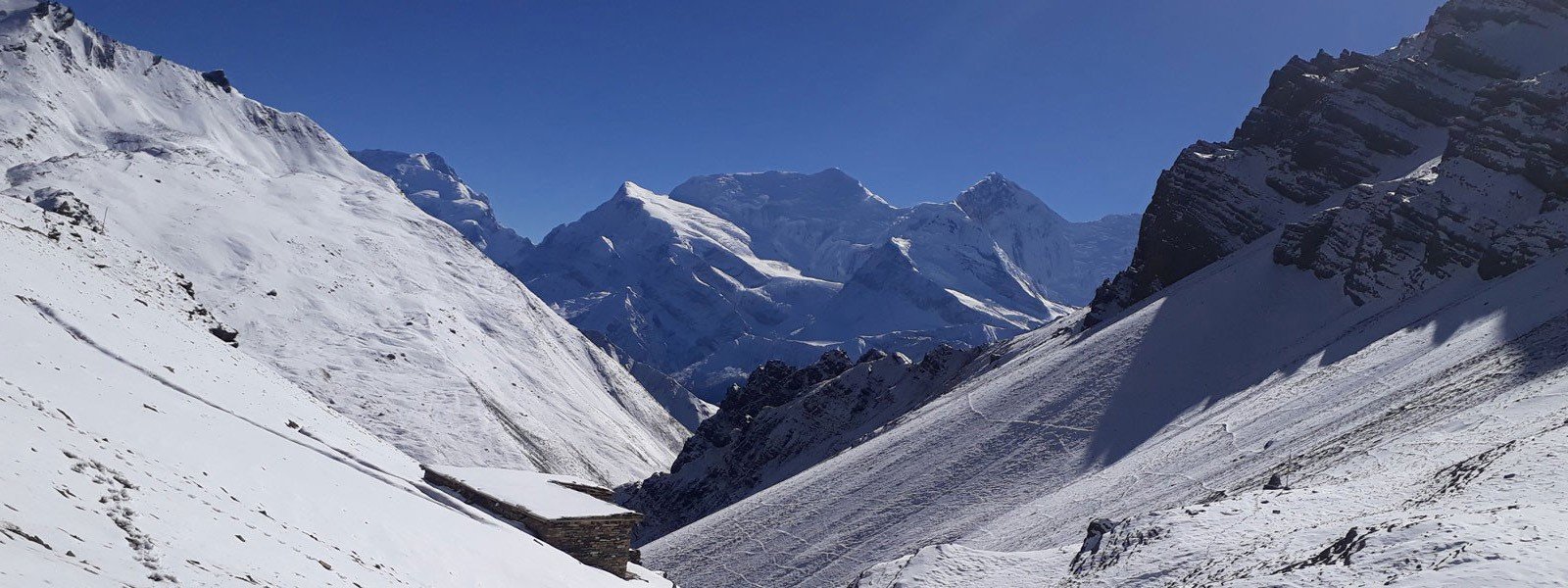
Today is the highlight of the Annapurna Circuit—the Thorong La Pass crossing. Begin the trek early in the morning to take advantage of firmer snow and safer conditions. The trail is steep and challenging, ascending from Thorong Phedi (4,600 m) to the pass at 5,416 m. Along the way, you’ll encounter stunning views of the surrounding Himalayan peaks and expansive high-altitude landscapes. At the summit, take time to celebrate your achievement, enjoy panoramic vistas, and snap photos at the highest point of the trek.
After crossing the pass, descend to Muktinath (3,800 m), a sacred site revered by both Hindus and Buddhists. The descent offers spectacular views of the Mustang region, with arid landscapes, deep valleys, and traditional Tibetan-style villages. Upon arrival, explore the Muktinath Temple, and rest in your lodge after a long but rewarding day.
After breakfast, begin your descent from Muktinath toward Marpha, a picturesque village in the Mustang region. The trail gradually winds through the arid, trans-Himalayan landscape, offering views of rugged cliffs, deep canyons, and terraced fields. Along the way, you’ll pass traditional Tibetan-style villages, mani walls, and prayer flags, reflecting the unique culture of the region.
Marpha is famous for its apple orchards, quaint streets, and charming stone houses. Upon arrival, check into your lodge and explore the village, visiting local workshops that produce apple brandy and dried fruits. This stop offers a perfect chance to rest and enjoy the serene Mustang landscape after several days of high-altitude trekking.
After breakfast, take a local bus from Marpha to Tatopani, a small village famous for its natural hot springs. The drive takes about 3–4 hours, descending through the scenic Kali Gandaki Valley with spectacular views of towering cliffs, terraced fields, and traditional villages along the way.
Upon arrival in Tatopani, relax and rejuvenate in the warm, mineral-rich natural hot springs, a perfect way to soothe tired muscles after days of trekking. Spend the rest of the day exploring the village, enjoying the peaceful surroundings, and preparing for the final stage of your journey toward Pokhara.
After breakfast, begin the trek from Tatopani toward Ghorepani, a beautiful village nestled at 2,850 meters. The trail initially climbs through dense forests of rhododendron, oak, and pine, offering occasional glimpses of terraced fields and waterfalls. You’ll pass traditional Gurung and Magar villages along the way, experiencing the local culture and hospitality.
The hike is moderately challenging, with steady ascents that provide excellent acclimatization. As you approach Ghorepani, the landscape opens up, revealing stunning panoramic views of Annapurna South, Hiunchuli, and Machhapuchhre (Fishtail). Arrive at Ghorepani in the late afternoon, check into your lodge, and enjoy the serene mountain atmosphere while preparing for an early morning hike to Poon Hill the next day.
Start the day early with an optional sunrise hike to Poon Hill (3,210 m) to witness breathtaking panoramic views of the Annapurna and Dhaulagiri ranges. After returning to Ghorepani for breakfast, continue your trek toward Tadapani.
The trail descends through lush rhododendron and oak forests, then gradually ascends again, passing traditional villages, terraced fields, and streams along the way. Enjoy the peaceful Himalayan scenery, with occasional viewpoints offering glimpses of Machhapuchhre (Fishtail), Annapurna South, and Hiunchuli.
Reach Tadapani in the afternoon, a small mountain village perched at 2,700 meters. Check into your lodge, relax, and soak in the serene surroundings while enjoying the crisp mountain air. This stop marks the continuation of the scenic descent toward the lower Annapurna region.
After breakfast, trek from Tadapani to Ghandruk, a charming Gurung village perched on a hilltop. The trek takes approximately 4 hours, descending through lush forests and terraced fields, with stunning views of Annapurna South, Hiunchuli, and Machhapuchhre (Fishtail). Explore Ghandruk’s narrow alleys, traditional stone houses, and local culture, and perhaps visit the Gurung Museum to learn about the community’s rich heritage.
After enjoying lunch in Ghandruk, board a local sharing jeep for a scenic 3-hour drive to Pokhara (827 m). The route passes rivers, waterfalls, and terraced valleys, gradually descending into the lush Pokhara Valley. Upon arrival, check into your hotel and spend the evening relaxing by the beautiful Phewa Lake or exploring the lakeside area.
After breakfast, begin your journey back to Kathmandu. By tourist bus, the drive takes approximately 8–9 hours, offering scenic views of rivers, terraced fields, and the rolling hills of central Nepal. The route passes through charming towns and provides a final glimpse of rural Nepali life before reaching the bustling capital.
For those preferring a quicker option, a short flight from Pokhara to Kathmandu takes only 25 minutes, offering stunning aerial views of the Himalayas, including Annapurna and Dhaulagiri peaks. Upon arrival in Kathmandu, check into your hotel and spend the evening at leisure, reflecting on your incredible Annapurna Circuit adventure.
After breakfast, check out from your hotel and transfer to Tribhuvan International Airport in Kathmandu for your onward flight. Take with you unforgettable memories of the Annapurna Circuit—the majestic mountains, vibrant local cultures, and the incredible journey through Nepal’s diverse landscapes. Safe travels and farewell!
Includes/Excludes
Cost Includes
- Airport pick up and drop off service.
- 3-night boutique Hotel in Kathmandu with breakfast.
- One night hotel in Pokhara with breakfast.
- Full board meals throughout the trip (Breakfast, Lunch, and Dinner).
- A government-licensed mountain guide includes his salary, food, accommodation, and insurance.
- One Porter for each two clients (Porter service not available for Solo travel).
- Annapurna Conservation Area Project Permits.
- Trekking permit: ‘Trekkers’ Information Management System (TIMS).
- Kathmandu to Besi Sahar by local bus and Pokhara to Kathmandu Sofa tourist bus.
- Besisahar to Chame by local sharing jeep.
- Nayapul to Pokhara by private vehicle.
- Private local tea house accommodations during the trek.
- Three times tea or coffee during the trek.
- Fresh fruit during the trek.
- Medical first aid kit box.
Cost Excludes
- Your Travel and rescue insurance.
- All the Food in Kathmandu. Also in the case of early return from the mountain (due to any reason).
- All the expenses in the mountain over than scheduled itinerary (due to strike, delay or canceled flight)
- Extra night Hotel in Kathmandu if arrive early or late departure than the scheduled Itinerary.
- All the Bar bills and personal expenses (phone call, laundry service, battery recharge, a bottle of water, hot water, shower.
- Tips for the guide and porter.
FAQs
The best seasons are spring (March to May) and autumn (September to November). During these months, the weather is generally stable, skies are clear, and mountain views are at their best. Summer (monsoon) is wet and slippery, while winter can be very cold, especially at higher altitudes.
The trek is considered moderate to challenging, depending on your fitness level and pace. Daily hikes range from 4–8 hours, and the highest point is Thorong La Pass (5,416 m). Proper acclimatization, hydration, and pacing are essential to avoid altitude sickness.
Key items include:
- Warm clothing for high altitudes (down jacket, thermal layers)
- Comfortable trekking boots and socks
- Trekking poles for steep sections
- Water bottle and purification tablets
- Sunglasses, hat, and sunscreen
- Personal first-aid kit and any medications
- Light backpack for daily essentials